What Are the Best Glass Block Windows from China?
Choosing the best glass block windows from China requires more than comparing photographs and factory prices. A convincing product must balance privacy, daylight, thermal performance, safety, and installation practicality. It should also match the building’s purpose. A bathroom may need strong obscurity, while a stairwell may benefit from softer light and greater visual depth.
Architect Ludwig Mies van der Rohe, whose buildings made extensive use of glass, famously said, “God is in the details.” That principle applies directly to glass block windows. Examine the block thickness, surface pattern, edge quality, spacer design, and joint compatibility. Ask suppliers for physical samples, technical data, inspection records, and clear information about packaging. One cracked corner can become a costly problem after a long shipment.
China offers many capable manufacturers, but quality is not identical across every factory. Look for consistent dimensions, clean molding, reliable sealing, and documented production controls. Check whether the supplier understands regional building requirements and can support installation advice. Energy performance deserves special attention. Some attractive blocks provide limited insulation, especially when compared with insulated framing systems.
There is no perfect shortlist. A lower price may hide weaker packaging or limited after-sales support. A premium appearance may not justify poor thermal results. This guide compares practical options instead of celebrating glossy catalogs. It also questions common assumptions, because the most beautiful glass block windows may not be the most durable choice for your climate, wall structure, or budget.
What Defines a High-Quality Chinese Glass Block Window?
A high-quality Chinese glass block window begins with dependable materials and accurate manufacturing. Clear or textured glass should have consistent thickness, even edges, and no deep bubbles, cracks, or cloudy patches. The block pattern must align correctly, especially when several units form one wall. Small visual differences can become obvious under strong daylight.
Performance matters more than appearance alone. Look for tested thermal insulation, water resistance, sound reduction, and fire performance. Reliable suppliers should provide independent test reports and clear production details. Ask about mortar compatibility, frame construction, drainage design, and installation tolerances. A well-made window should open or ventilate smoothly when designed as an operable unit. The frame should feel firm, not thin or flexible. In my experience, sample inspection often reveals more than polished catalog images. Still, one sample cannot represent every production batch. That is an important limitation.
Tips: Check several blocks under natural light. Run a finger along every edge. Request measurements, test certificates, packing photos, and installation guidance. Confirm how damaged units are handled before ordering. Compare actual sound and heat requirements with the supplier’s test conditions. A beautiful block is not automatically a durable window. Cost can also mislead; unusually low pricing may reflect thinner glass, weaker framing, or limited quality control. Examine the details closely.
How Do Glass Block Types Compare by Size, Pattern, and Light Transmission?
When comparing glass block windows from China, size is the first practical variable.
Common modules include 190 × 190 mm and 240 × 240 mm, often with 80 mm thickness. Smaller blocks create more joints and a busier surface. Larger blocks provide a calmer appearance and quicker installation. Yet, they may require careful framing around openings. Measure the wall, not only the block.
Pattern changes both privacy and brightness.
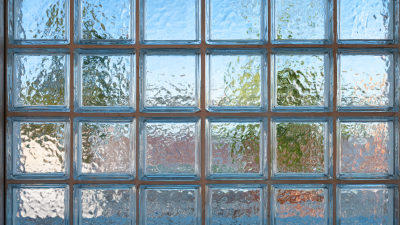
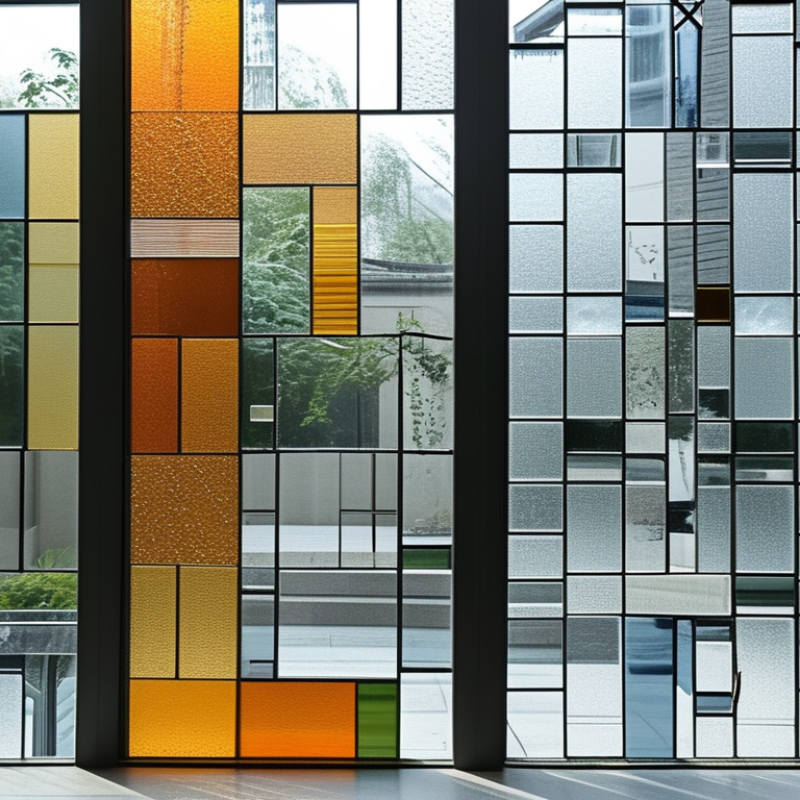
A clear block gives the strongest daylight but reveals more movement and shapes. A wave or ripple pattern bends light across the room, producing softer shadows. A heavily textured pattern offers better privacy near bathrooms or street-facing walls. It can also make a small room feel dimmer. I have found that catalog photographs often exaggerate brightness. Request physical samples.
Light transmission should be checked with the complete assembly, including mortar lines, frames, and surface texture.
Transparent blocks may transmit roughly 70–80% of visible light, while dense patterns transmit less. Actual results depend on viewing angle and weather. Ask suppliers for measured data, dimensional tolerances, edge quality, and packing details. Small chips are not always visible online. Check every carton on arrival. A reliable manufacturer should provide consistent samples, inspection records, and clear replacement terms. These details matter more than a glossy product image.
Which China Glass Block Windows Meet U-Value and Thermal Standards?
What Are the Best Glass Block Windows from China?
Choosing the best glass block windows from China starts with a measured U-value, not a glossy catalog. U-value shows heat flow through the window; lower values usually indicate better insulation. Ask for the tested whole-window result, including the frame, joints, and spacer details. A center-of-glass figure can look impressive. Yet it may not describe the installed unit. This difference matters in cold bedrooms, humid bathrooms, and sun-exposed stairwells.
Reliable manufacturers should provide test reports from accredited laboratories. Check the test date, sample size, glass block pattern, frame material, and boundary conditions. For export projects, compare results with EN 673, ISO calculation methods, or ISO 12567-1 whole-window testing, where applicable. Projects in China should also be checked against the relevant national energy codes and GB/T testing requirements. A quoted 1.8 W/m²K means little without its test method.
Thermal performance also depends on installation. Mortar joints, aluminum frames, perimeter sealants, and metal fixings can create thermal bridges around the block panel. Inspect a real corner sample, not only a small loose block. Look for condensation risks near the sill. A visually perfect panel may still perform poorly after installation. My practical caution is simple: do not select the lowest U-value without checking air leakage, solar control, and workmanship. Even careful comparisons have limits, because laboratory results cannot fully reproduce every building site.
How Do Compressive Strength and Water Resistance Affect Window Selection?
What Are the Best Glass Block Windows from China?
How Do Compressive Strength and Water Resistance Affect Window Selection?
Choosing glass block windows from China requires more than comparing appearance and price. Compressive strength matters when blocks face wind pressure, handling stress, or partial framing movement. However, most glass blocks are non-load-bearing. They should not replace a structural wall without engineered support. Ask suppliers for test reports, production details, and clear strength values. Check whether testing followed a recognized standard. A glossy surface alone proves very little.
Water resistance depends on the entire window system, not only the glass block. Mortar joints, sealants, spacers, frames, and exterior drainage all affect performance. In a rainy coastal area, poorly sealed joints may allow moisture behind the frame. Freeze-thaw cycles can worsen small cracks. I would inspect joint width, edge finish, and drainage paths before approving a sample. One overlooked corner can create a costly repair. This is where selection becomes less perfect than catalog photos suggest.
Tips: Request a physical sample and a recent test report. Spray the assembled sample around its joints, not just the glass surface. Check for water entry, uneven gaps, and visible movement. Confirm the intended wall position with a qualified installer or engineer. A stronger block may still fail when the surrounding frame is weak. My practical preference is a balanced system with verified compression performance and carefully detailed water control.
How Should Buyers Verify CE, ISO 9001, and Factory Quality Certifications?
Choosing the best glass block windows from China requires more than comparing prices or polished catalog photos. Buyers should verify documents at the factory level. CE marking is not a universal quality award; it indicates conformity with applicable European requirements. Request the EU Declaration of Conformity or Declaration of Performance when relevant, plus the referenced EN standards, testing laboratory, issue date, and product model. A missing model number is a warning sign.
ISO 9001 deserves careful checking. The ISO Survey 2022 recorded 1,265,216 valid ISO 9001 certificates worldwide, so the logo alone proves very little. Ask for the certificate number, certified site address, scope, expiry date, and accreditation details of the certification body. The scope should cover glass block production, not only trading or administration. Verify the record through the certificate issuer’s public database. Small detail. Important detail.
Factory quality evidence should include batch traceability, incoming glass inspection, dimensional tolerances, edge defects, compressive strength, thermal performance, and water resistance where applicable. Compare reports with the exact block size and frame system you will purchase. The IEA’s Buildings 2023 report identifies buildings as responsible for about 30% of global final energy demand, making thermal performance commercially relevant. Still, one test report cannot represent every shipment. I would request a recent production sample, an independent inspection, and photographs showing lot labels before payment. I have seen attractive certificates fail this simple check.
What Are the Best Glass Block Windows from China?
How should buyers verify CE, ISO 9001, and factory quality certifications?
How to read this chart: 1 means the evidence is normally relevant to that verification area, 0.5 means it may be required depending on the product, market, or audit scope, and 0 means it is not the primary evidence for that framework. CE requirements depend on the applicable EU product rules, while ISO 9001 confirms a quality-management system rather than product performance.