China Top Window Deals for Global Buyers?

China’s window market attracts global buyers with competitive pricing, broad customization, and large production capacity. Yet attractive window deals require more than comparing quotations. A low unit price may exclude glazing upgrades, packaging, testing, installation hardware, or inland freight.

Building-science expert Joseph Lstiburek famously says, “Windows are holes in walls.” His point remains practical: every opening affects comfort, moisture control, energy use, and long-term maintenance. Buyers should examine the complete window system, not only the frame material or advertised price.

Reliable Chinese manufacturers can supply thermal-break aluminum, uPVC, wood-aluminum, and high-performance curtain-wall systems. A coastal villa may need laminated glass, corrosion-resistant finishes, and stronger drainage details. A cold-climate project may require low-E insulating glass, warm-edge spacers, and documented U-values. These details change the real cost.

Good window deals should include clear specifications, production samples, factory quality checks, and traceable test reports. Ask how the supplier controls glass thickness, corner welding, gasket placement, and hardware alignment. Small defects become expensive when hundreds of units reach a construction site.

Experience also exposes an uncomfortable truth: the cheapest offer is rarely the safest offer. Some quotations look precise but remain incomplete. Delivery dates can shift. Color samples can differ slightly from approved versions. Even experienced buyers miss details.

This guide evaluates China’s window deals through performance, documentation, service, and total delivered cost. It also considers communication, warranty clarity, and after-sales support. The goal is not simply to find cheaper windows. It is to find dependable windows that perform as promised in their actual climate.
China Top Window Deals for Global Buyers?

Types of Windows Available from Chinese Manufacturers

Chinese manufacturers offer more than standard sliding windows. Global buyers can specify casement, tilt-and-turn, awning, fixed, folding, and lift-and-slide systems. Casement windows usually provide stronger perimeter sealing. Sliding units save interior space but may lose some airtightness. Tilt-and-turn designs support ventilation and emergency cleaning access.

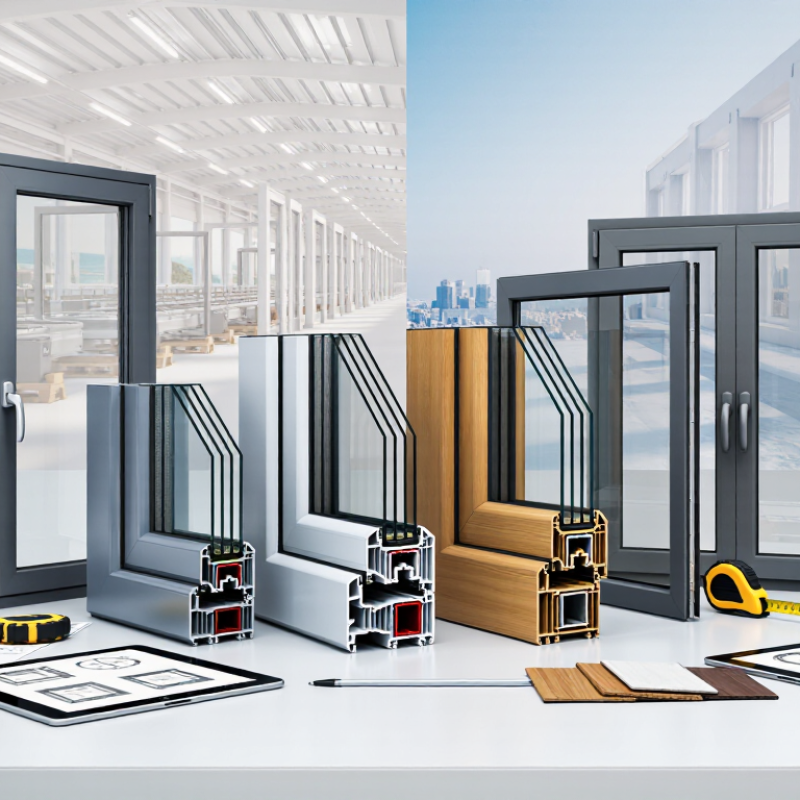
Frame choices include uPVC, aluminum, thermally broken aluminum, timber, and timber-aluminum composites. Thermally broken aluminum uses an insulating polyamide strip between metal sections. This detail reduces heat transfer across the frame. Low-E double glazing suits many moderate climates. Triple glazing may perform better in cold regions, but it adds weight, cost, and installation demands. The right glass depends on solar exposure, wind pressure, noise, and local energy rules.

The 2023 Global Status Report for Buildings and Construction, published by UNEP and the IEA, reports that buildings consume about 30% of global final energy. It also links buildings to roughly 26% of energy-related emissions. Window performance therefore deserves more than a catalog comparison. Ask manufacturers for U-value, solar heat gain coefficient, air leakage, water tightness, and wind-load test results. Request full-size samples. Small gasket gaps become obvious during rain testing. No specification sheet is perfect. Buyers should verify laboratory reports, hardware cycles, drainage paths, and installation tolerances before approving production.

Key Factors for Comparing Window Deals in China

China Top Window Deals for Global Buyers

Key Factors for Comparing Window Deals in China

A low window quote can look attractive, but price alone rarely shows the real value. Compare the complete specification, including frame material, glass layers, hardware, drainage design, and surface finish. Ask for drawings with exact dimensions, not only product photos. A practical sourcing review should also examine thermal performance, air tightness, water resistance, and noise reduction. These details affect comfort long after installation.

Request a recent sample or inspect production before shipment. Check corner joints, sealant lines, locking points, and glass edges closely. Factory experience matters, but written quality procedures matter more. Confirm testing documents through recognized laboratories or certification bodies relevant to your market. Delivery terms deserve equal attention. Clarify packaging, loading methods, replacement procedures, warranty limits, and responsibility for damaged goods. I have seen buyers compare unit prices while overlooking installation accessories. That mistake can change the final budget.

Tips: Build a comparison sheet with identical specifications. Separate product cost from shipping, taxes, installation, and possible replacements. Ask suppliers to explain every unusual price difference. Keep one approved sample for reference. Do not rely on promises alone. Written details are safer. A small trial order may reveal weak packaging or slow communication. That can be inconvenient, but it is useful evidence before a larger purchase.

How to Evaluate Quality, Materials, and Energy Efficiency

China Top Window Deals for Global Buyers

How to Evaluate Quality, Materials, and Energy Efficiency

A competitive window price means little without verified performance data. Ask suppliers for test reports covering air leakage, water resistance, wind pressure, and thermal transmission. These documents should identify the testing method, product configuration, and testing date. A clear specification builds trust. Vague claims do not.

Material choice affects durability and comfort. Aluminum frames are strong and slim, but they need thermal breaks to reduce heat transfer. uPVC frames offer good insulation and require careful attention to reinforcement. Timber can provide warmth and character, yet moisture control becomes essential. Inspect corner joints, drainage holes, seals, hardware, and glass edges. Small defects often become expensive problems. Request production samples before placing a large order. A sample may look excellent, but installation details can still change the result.

Energy efficiency should be judged by numbers, not labels alone. Compare U-value, solar heat gain, visible light transmission, and glazing thickness. Low-emissivity glass can improve insulation, while suitable solar control helps in hot climates. However, the best specification depends on building orientation and local weather. I would not choose the lowest U-value automatically. It may increase cost without improving comfort in every room. Confirm packaging, delivery protection, warranty terms, and replacement procedures in writing. Even reliable suppliers can make mistakes. Careful records make those mistakes easier to solve.

China Top Window Deals for Global Buyers: Quality, Materials, and Energy Efficiency

The chart compares representative whole-window U-factor benchmarks for common material and glazing combinations. A lower U-factor means less heat transfer and generally better energy efficiency. Actual performance depends on frame design, glass spacing, low-E coating, gas fill, installation quality, and certified testing.

Reference basis: typical ranges reported in public fenestration guidance from the U.S. Department of Energy and NFRC. Values are representative benchmarks, not company or brand data. Unit: Btu/h·ft²·°F.

Export Standards, Customization, and Order Requirements

China Top Window Deals for Global Buyers?

Export Standards, Customization, and Order Requirements

Competitive window pricing can help global buyers control project costs. However, the lowest quotation is not always the safest choice. Suppliers should provide clear specifications for frame material, glass thickness, thermal performance, air tightness, water resistance, and wind-load testing. Requirements vary by destination. Confirm the applicable standards before production, rather than relying on a general compliance statement.

Customization should begin with accurate drawings. Share opening sizes, installation details, window types, colors, hardware preferences, glazing options, and screen requirements. Small details matter. For example, an outward-opening window may need different hardware and packaging protection. Ask for a physical sample or approved prototype before placing a large order. Digital images can hide uneven corners, color differences, or weak seals.

Order documents should state quantities, tolerances, inspection points, packaging method, delivery terms, and replacement procedures. Confirm the minimum order quantity and production schedule in writing. A detailed packing list can prevent problems at the port. Wooden crates, corner guards, moisture protection, and labeled cartons are practical safeguards. One weakness remains: buyers sometimes focus too heavily on unit price. That can overlook installation labor, damaged components, and local certification costs. Allow time for technical questions and independent inspection. Mistakes still happen. Clear records make them easier to correct.

Choosing a Reliable Chinese Window Supplier for Global Projects

China Top Window Deals for Global Buyers?

For global buyers, supplier reliability matters more than a glossy catalog. The IEA’s 2023 Global Status Report for Buildings and Construction reports important figures. Buildings consume about 30% of global final energy. They produce roughly 26% of energy-related emissions. Window U-values, solar heat gain, air leakage, and durability affect project performance. Request independent test reports for the exact profile, glass, hardware, and size.

A dependable Chinese supplier should provide traceable production records and inspection plans. Review export experience and audit the factory when possible. Check whether certificates identify the same factory and product series. Confirm EN, ASTM, or local requirements for the destination market. ISO 9001 supports process control, but it cannot guarantee installation quality. The World Bank’s Logistics Performance Index 2023 also highlights customs, tracking, and delivery reliability. Put these details into the contract.

Tips: Compare three suppliers with one specification sheet. Request a sealed sample corner, coating data, packing photos, and pre-shipment inspection. Define acceptable defects clearly. Link payment stages to documented evidence.

I have learned that the cheapest quotation is often incomplete. It may exclude reinforced packaging, thermal breaks, replacement units, or site guidance. That gap can be expensive. Ask for landed-cost calculations, lead-time buffers, and warranty response procedures. A supplier should admit when a feature is untested. That honesty is valuable. Start with a pilot shipment before scaling the project.

China Top Window Deals for Global Buyers? – Choosing a Reliable Chinese Window Supplier for Global Projects

Practical comparison benchmarks for evaluating Chinese window suppliers. Actual specifications, costs, and delivery times vary by design, quantity, destination, and project requirements.
Evaluation Dimension Recommended Benchmark Relevant Data or Standard What Global Buyers Should Verify
Product Configuration Use a complete configuration sheet before requesting quotations. Frame material, profile depth, glass build-up, hardware, gaskets, finish, dimensions, and opening type. Confirm that every quotation uses the same specifications so prices can be compared fairly.
Thermal Performance Select the required whole-window U-value according to the project climate and local code. U-value is expressed in W/m²·K; a lower value indicates better heat-transfer resistance. Double glazing generally performs better than single glazing. Request tested or calculated values for the complete window, not only for the glass or frame separately.
Solar and Light Performance Balance visible light transmission with solar-control requirements. Visible Transmittance (VT) describes daylight transmission; Solar Heat Gain Coefficient (SHGC) describes solar heat entering through the window. Check whether the proposed glass is suitable for the building orientation, cooling load, and local energy requirements.
Air, Water, and Wind Resistance Require performance testing for the actual window design and size range. Air leakage, water penetration, and structural wind-load resistance are separate performance characteristics. Verify test size, test pressure, opening type, installation method, and whether the results apply to the project configuration.
Acoustic Performance Specify the required sound-reduction rating when the project is near roads, airports, or dense urban areas. Sound performance is commonly reported using laboratory ratings such as Rw or STC, depending on the market. Ask for a laboratory report covering the exact glass composition, frame, seals, and window assembly.
Compliance Documentation Documentation must match the destination market and product category. Depending on the destination, requirements may include EN 14351-1, UKCA-related requirements, local building codes, or regional energy and safety rules. Check report validity, issuing laboratory, product scope, test date, and whether documents are traceable to the supplied model.
Quality Management Prefer a documented quality-control process with inspection records. ISO 9001 is a quality-management-system standard; it does not by itself guarantee the performance of a specific window. Request incoming-material checks, in-process inspection points, final inspection criteria, and nonconformity procedures.
Sampling and Approval Approve a physical sample or production mock-up before mass manufacturing. A sample should represent the final profile, glass, hardware, drainage, seals, colour, and surface finish. Record approved drawings, tolerances, colour references, packaging requirements, and revision numbers.
Production and Delivery Planning Allow time for engineering approval, sampling, production, inspection, and international transport. A common planning structure is: technical approval, sample production, bulk production, pre-shipment inspection, and export delivery. Exact lead times are project-specific. Obtain a written production schedule with milestone dates and define how delays or design changes will be managed.
Packaging and Container Utilization Packaging should protect glass, corners, hardware, and finished surfaces during multimodal transport. Relevant controls include protective film, corner protection, moisture management, crate design, carton identification, and loading plans. Review packing photos, loading diagrams, package dimensions, gross weight, and container utilization before shipment.
Commercial Cost Comparison Compare total landed cost rather than factory price alone. Total cost may include product price, tooling, sample fees, inland transport, export handling, freight, insurance, duties, taxes, installation, and after-sales service. Use the same Incoterm, currency, quantity, specification, delivery address, and payment assumptions for every quotation.
Warranty and After-Sales Support Define warranty coverage and spare-parts responsibilities in the purchase contract. Important items include frame finish, insulated-glass seal, hardware, gaskets, replacement parts, installation defects, and response procedures. Confirm claim evidence, response time, replacement process, remote technical support, and responsibility for local installation.
Supplier Risk Review Use independent verification before placing a large project order. Useful checks include business registration, factory address, production capability, export history, financial terms, references, and third-party inspection. Verify that the contracting entity, manufacturing location, bank details, certificates, and inspection records are consistent.

Note: Performance values and compliance obligations must be confirmed against the destination country's current regulations, project specifications, and independently verifiable test documentation.