Why Choose Double Pane Windows for Global Projects?
Why Choose Double Pane Windows for Global Projects?
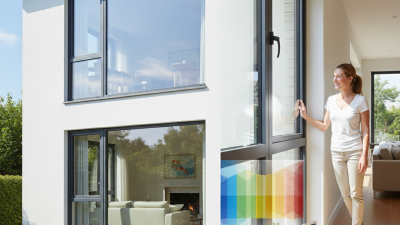
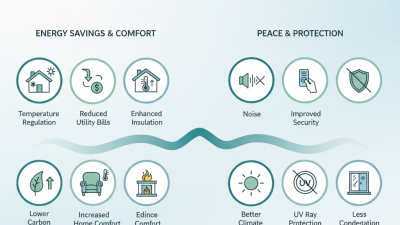
Global building projects face different climates, energy standards, and construction habits. Double pane windows offer a practical way to address these variations. Their sealed insulating space can reduce heat transfer, improve indoor comfort, and limit exterior noise. In a cold city, they help retain warmth near the glass. In a hot region, they can reduce unwanted solar heat when paired with suitable coatings.
The details matter. A window specified for Toronto may not suit Dubai or Singapore. Glass coating, gas fill, spacer design, frame material, and installation quality all affect performance. Dr. Stephen Selkowitz, a respected building-energy researcher, has said, “Windows are the most complex part of the building envelope.” That observation remains highly relevant. Double pane windows are not a universal fix. Poor sealing can cause condensation, while incorrect glass selection may increase cooling loads. Small mistakes become expensive across hundreds of units.
A reliable global specification should begin with climate data, façade orientation, local testing requirements, and expected maintenance conditions. Project teams should review U-values, solar heat gain coefficients, visible transmittance, and acoustic ratings together. One number is never enough. Field inspections also deserve attention. Even excellent glass performs poorly when the frame is misaligned or the perimeter seal is damaged. This is where real projects become less perfect than drawings suggest.
Choosing double pane windows is therefore a balance between efficiency, durability, comfort, cost, and regional suitability. Careful verification is essential. The best solution is not always the most heavily engineered one, but the one that performs reliably in its actual environment.

Double-Pane Windows: Structure, Materials, and Insulation Principles
Why Choose Double Pane Windows for Global Projects?
Double-Pane Windows: Structure, Materials, and Insulation Principles
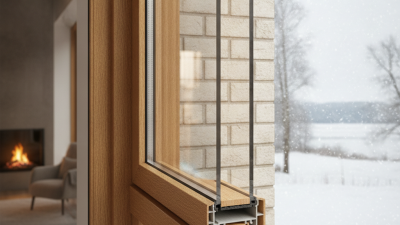
Double-pane windows contain two glass sheets separated by a sealed insulating space. A spacer keeps the panes apart and supports the edge seal. The cavity usually contains dry air or an inert gas, depending on the specification. Low-emissivity coatings can reflect heat while allowing useful daylight inside. This layered structure reduces heat transfer more effectively than single glazing.
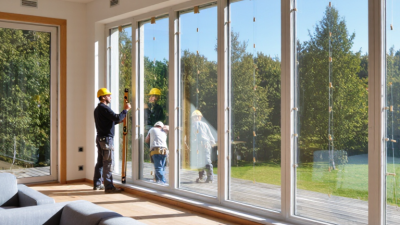
Material selection affects performance over time. Glass thickness should match wind loads, opening size, and safety requirements. Spacers may use metal or less conductive composite materials. The frame can be made from thermally improved aluminum, uPVC, or engineered wood. Each choice changes strength, maintenance, cost, and thermal behavior. On project sites, I have seen small installation gaps undermine excellent window specifications.
The insulating principle is simple but sensitive. The sealed cavity slows conduction, while the coating limits radiant heat movement. Multiple seals help prevent moisture from entering the space. In cold regions, this can reduce interior surface condensation. In hot climates, it can lower cooling demand when paired with suitable solar control. However, performance depends on orientation, shading, ventilation, and installation quality. A window rated for one climate may not suit another without adjustment. No specification is perfect. Local testing, verified calculations, and careful inspection remain necessary for reliable global projects.
NFRC Metrics: Comparing U-Factor, SHGC, Visible Transmittance, and Air Leakage
Why Choose Double Pane Windows for Global Projects?
NFRC Metrics: Comparing U-Factor, SHGC, Visible Transmittance, and Air Leakage
Double pane windows can improve comfort, energy performance, and interior usability across different climates. NFRC-certified ratings offer a consistent way to compare tested products, but numbers need context. A lower U-factor means better resistance to heat transfer. In cold regions, this can reduce heat loss near a bedroom window. In hot climates, SHGC becomes equally important because it measures how much solar heat enters the room. A lower SHGC can help control afternoon heat through west-facing glass.
Visible Transmittance, or VT, shows how much daylight passes through the glazing. Higher VT may reduce daytime lighting demand, though excessive brightness can create glare. Air Leakage measures how much air passes through the window assembly under pressure. Lower leakage usually means fewer drafts and better comfort. Small differences matter in windy coastal locations. However, a strong rating does not guarantee perfect installation. Frame alignment, perimeter sealing, and wall drainage still require careful site inspection. I have seen good windows perform poorly after rushed installation.
Tips: Compare U-factor and SHGC with the project’s climate zone, orientation, shading, and heating system. Check VT when rooms depend on daylight. Review air-leakage values, then specify qualified installation testing. Do not select the lowest number automatically. A balanced package often performs better.
Why Choose Double Pane Windows for Global Projects? — NFRC Metrics: Comparing U-Factor, SHGC, Visible Transmittance, and Air Leakage
| Representative Glazing Configuration |
U-Factor
Btu/h·ft²·°F
Lower is better
|
SHGC
Solar Heat Gain Coefficient
Lower reduces solar heat gain
|
Visible Transmittance
VT
Higher admits more daylight
|
Air Leakage
cfm/ft² at 1.57 psf
Lower is better
|
Typical Project Application |
| Single Clear Glass |
0.90–1.10 |
0.70–0.85 |
0.75–0.90 |
0.20–0.30 |
Warm climates or low-performance replacement applications |
| Double Clear Glass |
0.45–0.60 |
0.55–0.70 |
0.65–0.80 |
0.10–0.20 |
Basic energy improvement where daylight and solar gain are priorities |
| Double Low-E Glass with Argon |
0.25–0.35 |
0.35–0.60 |
0.50–0.70 |
0.05–0.15 |
Balanced performance for mixed, heating, and cooling climates |
| Double Solar-Control Low-E Glass |
0.25–0.35 |
0.25–0.40 |
0.40–0.60 |
0.05–0.15 |
Hot climates and façades with high solar exposure |
| Triple Low-E Glass with Argon |
0.15–0.25 |
0.25–0.50 |
0.45–0.65 |
0.03–0.10 |
Cold climates, high-performance buildings, and demanding comfort targets |
How to read the metrics: U-factor measures heat flow through the complete window assembly; SHGC measures the fraction of incident solar radiation admitted through the window; Visible Transmittance indicates the proportion of visible light transmitted; and Air Leakage measures the rate of air passing through a closed and latched window under a standardized pressure difference.
The values shown are representative performance ranges for common glazing configurations, not ratings for a specific product. Actual NFRC values depend on frame material, spacer, glass coatings, gas fill, size, operating type, and installation. NFRC air-leakage testing is commonly reported in cfm/ft² at 1.57 psf (75 Pa).
Global Compliance: Applying ISO Standards and Regional Building Energy Codes
Why Choose Double Pane Windows for Global Projects?
Global window compliance requires more than choosing two layers of glass. ISO standards help create a consistent technical framework, while regional building energy codes define local obligations. ISO 10077 supports thermal calculations for windows and doors. ISO 52016 helps assess building energy performance. These references should be checked against the current rules in each project location.
A double pane unit can reduce heat transfer through its sealed cavity. Low-emissivity coatings, inert gas fills, and warm-edge spacers may improve performance. However, regional codes often measure more than center-glass insulation. They can regulate whole-window U-values, solar heat gain, visible transmittance, air leakage, and condensation risk. In a hot climate, excessive solar gain may increase cooling loads. In a cold climate, weak edge insulation can create indoor condensation.
Details matter.
Project teams should request test reports, calculation methods, product drawings, and installation specifications. Local authorities may require different evidence, even when the design follows the same ISO reference. I have seen compliant-looking schedules fail because the frame was excluded from the thermal calculation. That mistake is easy to miss. It also shows why regional review should begin before procurement. ISO methods improve comparison, but they do not replace local code approval. Results can change with orientation, shading, spacer design, and installation quality. A carefully modeled window may perform poorly when gaps, sealant joints, or drainage paths are handled carelessly.
Why Choose Double Pane Windows for Global Projects?
Double pane glazing can substantially reduce conductive heat transfer compared with single glazing.
The chart uses representative center-of-glazing U-values commonly reported for standard window constructions.
Lower U-values indicate better thermal insulation.
For global compliance, ISO 10077-1 provides methods for calculating the thermal transmittance of windows
and doors, while ISO 52022 addresses solar and luminous properties. These ISO standards support consistent
performance calculations; the applicable maximum U-factor and energy requirements are established by regional
building energy codes. Actual whole-window performance depends on the frame, spacer, glazing dimensions,
gas fill, coatings, and installation quality.
Representative center-of-glazing values: single clear glass ≈ 5.8 W/m²·K, double clear air-filled glazing ≈ 2.8 W/m²·K,
double low-emissivity argon-filled glazing ≈ 1.4 W/m²·K, and triple low-emissivity argon-filled glazing ≈ 0.7 W/m²·K.
Reference frameworks: ISO 10077-1, ISO 52022, and regional energy-code compliance procedures.